Most dogs pull on the leash because pulling works: it gets them where they want to go, faster. To stop it, make pulling useless and make walking beside you worth it. Stop moving the moment the leash goes tight, pay your dog generously for returning to your side, and practice in boring places before busy ones. Most dogs show real improvement within two to four weeks of consistent work. Here is the plan our trainers use.
Key Points: Stopping Leash Pulling
- Dogs pull because pulling works. Forward motion rewards the pull on every walk.
- Stop moving the moment the leash goes tight. Walk on again when it slackens.
- Pay your dog at your side, in boring places first and busy ones later.
- Gear manages, training fixes. A front clip harness helps while you train; retractable leashes undo it.
- Lunging and barking is reactivity, not pulling, and needs a different plan.
- Most dogs improve in two to four weeks of consistent daily work.
Why Dogs Pull on the Leash
Dogs walk faster than people. A leash is the only thing slowing them down, and every time a dog hits the end of the leash and the walk keeps moving forward, the pulling gets reinforced. The dog learns a simple rule: pressure on my collar means we are getting somewhere.
Excitement makes it worse. The first five minutes of a walk, the block where the rabbits live, and the home stretch toward the park are where most pulling happens. None of this means your dog is stubborn or dominant. It means nobody has taught the dog that a loose leash is the thing that makes the walk continue.
How to Stop Your Dog Pulling on the Leash: The Step by Step Plan
Step 1: Pay the position
Start in your living room or backyard with a handful of food your dog actually cares about. Every time your dog lands at your left side, mark it with a word like “yes” and feed at the seam of your pants. You are teaching the dog that the space next to your leg is the best paying spot in the world. Five minutes a day is plenty.
Step 2: Make a tight leash stop the walk
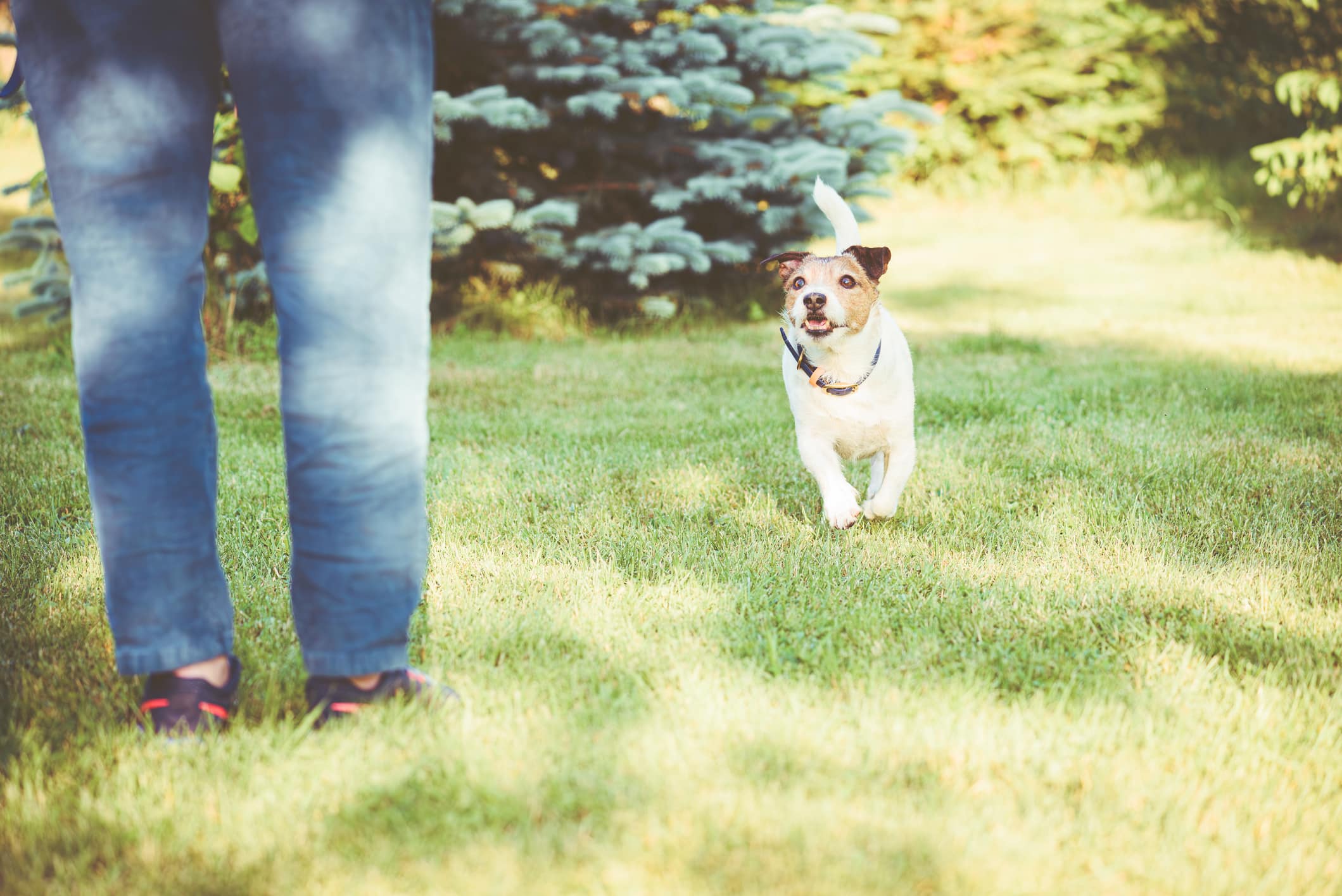
On walks, the rule is simple: the moment the leash goes tight, you stop. Stand still like a tree. When your dog gives slack or looks back at you, mark, feed at your side, and move again. Forward motion is the biggest reward on any walk, and you control it.
Step 3: Change direction before the pull
If your dog surges ahead, calmly turn and walk the other way, then pay your dog when it catches up to your side. Done consistently, this teaches the dog to keep one eye on you instead of dragging you down the sidewalk. Keep your turns smooth. The point is information, not punishment.
Step 4: Add distractions slowly
A loose leash in your driveway is not a loose leash outside a Denver dog park. Work up a ladder: quiet street, busier street, park at a distance, park up close. If your dog cannot take food or respond to its name, you are too close to the distraction. Back up and build again.
Step 5: Decide what the walk is for
Sniffing is good for dogs. The fix is structure, not a ban: teach a release word like “go sniff” so your dog learns the difference between walking with you and free time. A walk that alternates five minutes of structure with a few minutes of sniffing is easier on both of you than a 40 minute tug of war.
Walks Should Not Be a Workout You Dread
If your arm aches after every walk, you are not failing and your dog is not broken. Pulling is the most common thing Denver owners call us about, and it is one of the fastest habits to turn around with a clear plan.
Dog Dynamix teaches loose leash walking in every program, and a trainer can show you the mechanics in person in a single private lesson.
What Gear Helps (and What Does Not)
A standard 6 foot leash and a flat collar or properly fitted slip lead are all most dogs need once the training is in place. A front clip harness can reduce pulling while you train, but it manages the problem rather than fixing it. Retractable leashes teach the exact opposite of what you want: constant tension that pays off with more distance. Skip them for training.
No piece of equipment replaces the work. Gear changes how pulling feels; training changes whether your dog pulls at all.
When Pulling Is Really Reactivity
If your dog is not just pulling but lunging, barking, or fixating on other dogs and people, you are dealing with leash reactivity, and loose leash drills alone will not fix it. Start with our guide on how to fix dog reactivity, and consider working with a reactive dog trainer in Denver who can read your dog in person.
How Dog Dynamix Fixes Leash Pulling
Dog Dynamix is a dog training company serving Denver, Littleton, Lakewood, and the Front Range. Loose leash walking is a core skill in every program we run, from private lessons to our Door to Door day training program, where we pick your dog up from home, train through the day, and bring it back with homework for you. Dogs that need full immersion graduate to reliable leash manners through board and train.
In Denver, private lessons typically run $100 to $200 per session and day training programs run $2,000 to $3,000. Current program pricing is on our dog training pricing page. You can also read reviews from our clients on Google or call us at (720) 500-2525.
More Denver Dog Training Guides
Everything else worth reading before you choose a program.
- Recall Training: How to Teach Your Dog to Come When CalledThe next skill after a loose leash: a dog that comes back the first time you call.
- How to Fix Dog ReactivityIf the pulling comes with lunging and barking at dogs or people, start here.
- Dog Training Prices in DenverWhat private lessons, day training and board and train cost in 2026.
Frequently Asked Questions About Leash Pulling
What is the fastest way to stop a dog from pulling on the leash?
Stop moving the instant the leash goes tight, and pay your dog at your side when it gives slack. Pair that with short daily sessions in low distraction places. Most owners see a clear difference inside two weeks when they are consistent on every single walk.
Do front clip harnesses stop pulling?
They reduce it. The front attachment turns the dog toward you when it pulls, which takes the power out of the pull. But a harness is a management tool. If you never train the loose leash itself, the pulling comes back the moment the gear changes.
Why does my dog pull worst at the start of the walk?
Arousal. Your dog has been waiting all day and the first block is the most exciting part. Burn off the edge first: a minute of obedience at the door, calm leashing, and do not step outside until the leash is slack. Starting calm sets the tone for the whole walk.
How long does it take to teach loose leash walking?
Two to four weeks of consistent daily work for most dogs, longer for strong pullers with years of practice. The timeline depends less on the dog and more on consistency: one person letting the dog pull on half the walks will undo the other half.
Should I let my dog sniff on walks?
Yes. Sniffing is mental exercise and one of the best parts of a dog’s day. Put it on cue instead of banning it: teach a release word that means free time, and ask for a loose leash in between. Structure and sniffing can live on the same walk.
Ready to Retire the Tug of War
Tell us what your walks look like and we will tell you which program fits. No pressure and no consultation fee to find out.